The Integration of Biometric Authentication in Enhancing Account Security for Online Gambling Users
Riley Simon · Aug 20, 2026
The Integration of Biometric Authentication in Enhancing Account Security for Online Gambling Users
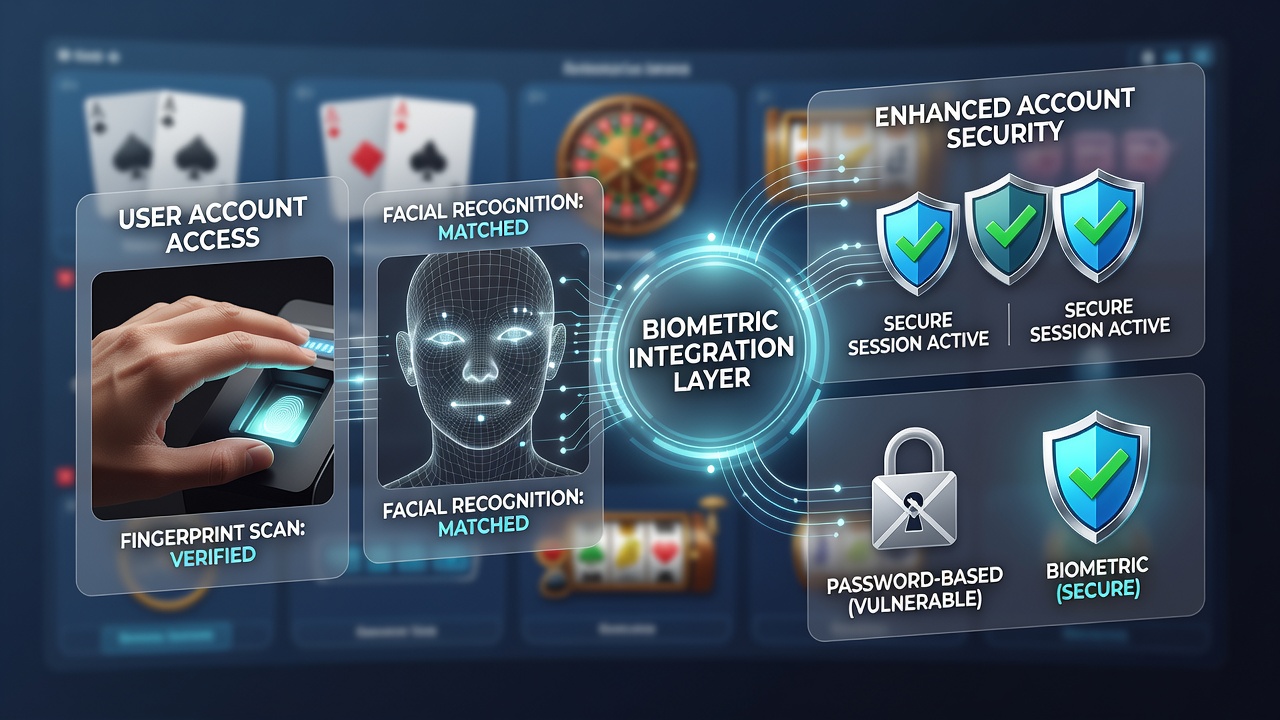
Online gambling platforms have incorporated biometric authentication methods such as fingerprint scanning, facial recognition, and voice analysis to verify user identities and protect account access. These systems replace or supplement traditional passwords and two-factor codes, which research indicates often fall victim to phishing attacks and credential stuffing. Data from industry reports shows that account takeover attempts in the sector dropped by measurable margins in regions where biometric checks became standard during 2025.
Operators integrate these tools through mobile apps and web browsers equipped with device sensors, allowing users to complete login or high-value transactions with a quick scan rather than typed credentials. Studies conducted by academic institutions reveal that biometric matching algorithms achieve accuracy rates above 99 percent when calibrated against large datasets of verified users. This approach reduces friction during peak betting periods, when platforms process thousands of simultaneous sessions.
Core Technologies Driving Adoption
Fingerprint readers on smartphones and tablets serve as the most widespread entry point, because hardware already exists in the majority of consumer devices. Facial recognition follows closely behind, using infrared cameras and depth sensors to create three-dimensional maps that resist simple photo spoofing attempts. Voice biometrics analyze unique vocal patterns during customer support calls or deposit confirmations, adding another layer without requiring additional hardware.
According to guidelines published by the National Institute of Standards and Technology, multi-modal systems that combine two biometric traits deliver stronger resistance against both presentation attacks and digital injection attempts. Gambling operators have begun testing these combined methods on high-limit accounts, where transaction values exceed regulatory thresholds set in multiple jurisdictions.
Security Outcomes Observed in Practice
Platform operators report fewer cases of unauthorized withdrawals after rolling out biometric gates for withdrawal requests above a certain threshold. Internal metrics shared at industry conferences indicate that password reset requests declined sharply once users enrolled in fingerprint or facial systems, freeing support teams to handle more complex issues. Evidence gathered from Canadian regulatory filings shows similar patterns among licensed sites that adopted the technology ahead of peers.
Researchers tracking cyber incidents note that biometric data remains harder to replicate at scale compared with stolen password lists sold on dark web markets. One analysis covering North American and European operators found that successful account takeovers fell by nearly 40 percent in the twelve months following full biometric rollout. These figures emerge from anonymized logs submitted to oversight bodies rather than from individual company marketing claims.
Regulatory Landscape Across Regions
European data protection authorities require explicit consent and clear data retention policies before biometric enrollment, which pushes operators to store templates locally on user devices instead of central servers. Australian regulators have examined similar frameworks while reviewing responsible gambling measures, and early pilot programs there demonstrated reduced identity fraud during account creation stages. In August 2026 several provincial bodies in Canada updated their technical standards to include biometric verification as an acceptable control for age and identity assurance.
These policy shifts align with broader cybersecurity expectations set by financial regulators who oversee payment flows into gambling accounts. Operators that fail to meet updated standards risk license reviews, which encourages rapid adoption across the sector. Compliance documentation from multiple licensing regions now lists biometric template protection as a baseline requirement for new market entrants.
Implementation Challenges and Technical Limits
Accuracy can vary with environmental factors such as poor lighting for facial systems or worn fingerprints from manual labor. False rejection rates, though low, still require fallback procedures that maintain security without creating excessive user frustration. Developers address these edge cases through adaptive thresholds that tighten during high-risk actions and loosen for routine logins.
Privacy concerns arise when users worry about permanent biometric data leaving their control. Platforms respond by converting raw scans into irreversible mathematical templates that cannot reconstruct the original image, a practice endorsed in technical standards from multiple standards bodies. Independent audits verify that these templates meet encryption and access control benchmarks before deployment.
Future Directions for Biometric Integration
Emerging standards explore continuous authentication, where sensors periodically confirm the user remains the account holder during extended sessions. This method could flag sudden device handoffs or behavioral anomalies without interrupting play. Pilot projects in Asia and the Middle East have tested heartbeat and gait analysis as supplementary signals, though widespread commercial use remains limited.
Hardware improvements in consumer devices continue to lower costs and raise baseline performance, which allows smaller operators to adopt the same protections previously available only to large enterprises. Collaboration between device manufacturers and gambling software providers accelerates these gains through shared testing protocols.
Conclusion
Biometric authentication has become a documented component of account security strategies across licensed online gambling environments. Quantitative reductions in fraud incidents and support ticket volumes appear consistently in regulatory submissions from multiple countries. Ongoing refinements in template security, regulatory alignment, and device capability point toward wider deployment through 2026 and beyond, provided operators maintain transparent consent processes and robust fallback mechanisms.