Geographic Differences in Identity Checks Influencing Secure Access to Prediction Market Mobile Applications
Riley Simon · Oct 10, 2026
Geographic Differences in Identity Checks Influencing Secure Access to Prediction Market Mobile Applications
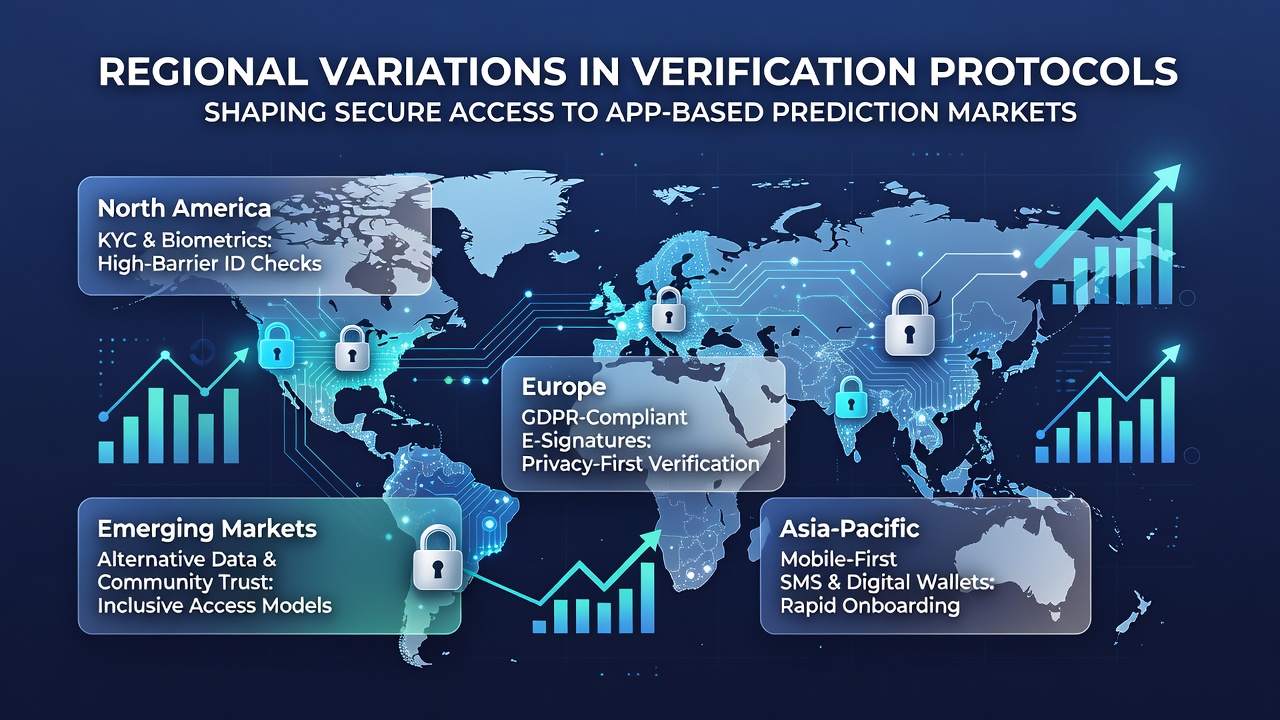
App-based prediction markets have expanded rapidly since the early 2020s, and regional variations in verification protocols now determine who gains secure entry to these platforms. Data from industry reports show that protocols range from basic email confirmation in some jurisdictions to multi-layered biometric and government-ID checks in others, shaping both user access and platform security outcomes. Observers note that these differences stem from local regulatory frameworks, data-protection laws, and risk assessments tied to financial transactions and event-based wagering.
North American Approaches
Canadian provinces apply distinct standards that affect app onboarding. Ontario requires real-time identity verification through the Alcohol and Gaming Commission of Ontario, including facial matching and address confirmation, while other provinces maintain lighter requirements focused on age attestation alone. In the United States, state-level rules create further fragmentation: platforms operating in New Jersey integrate geolocation and Social Security number cross-checks, whereas users in states without dedicated prediction-market legislation often encounter third-party KYC vendors that rely on credit-bureau data.
Research indicates these layered checks reduce account-sharing incidents by up to 40 percent in regulated markets, yet they also lengthen the average signup time from two minutes to nearly eight. And because each state or province updates its data-sharing agreements at different intervals, users crossing borders frequently face repeated verification prompts.
European and Asia-Pacific Standards
Within the European Union, GDPR compliance drives verification design. Platforms must obtain explicit consent for data processing, leading many operators to store biometric templates on-device rather than in central servers. Australia’s framework, enforced through the Australian Communications and Media Authority, combines mandatory 100-point identity checks with ongoing transaction monitoring, a system that has been linked to lower fraud rates in peer-reviewed studies. Meanwhile, several Southeast Asian markets rely on mobile-phone-number binding and national ID databases, producing verification flows that complete in under 60 seconds but raise questions about cross-border data transfers.
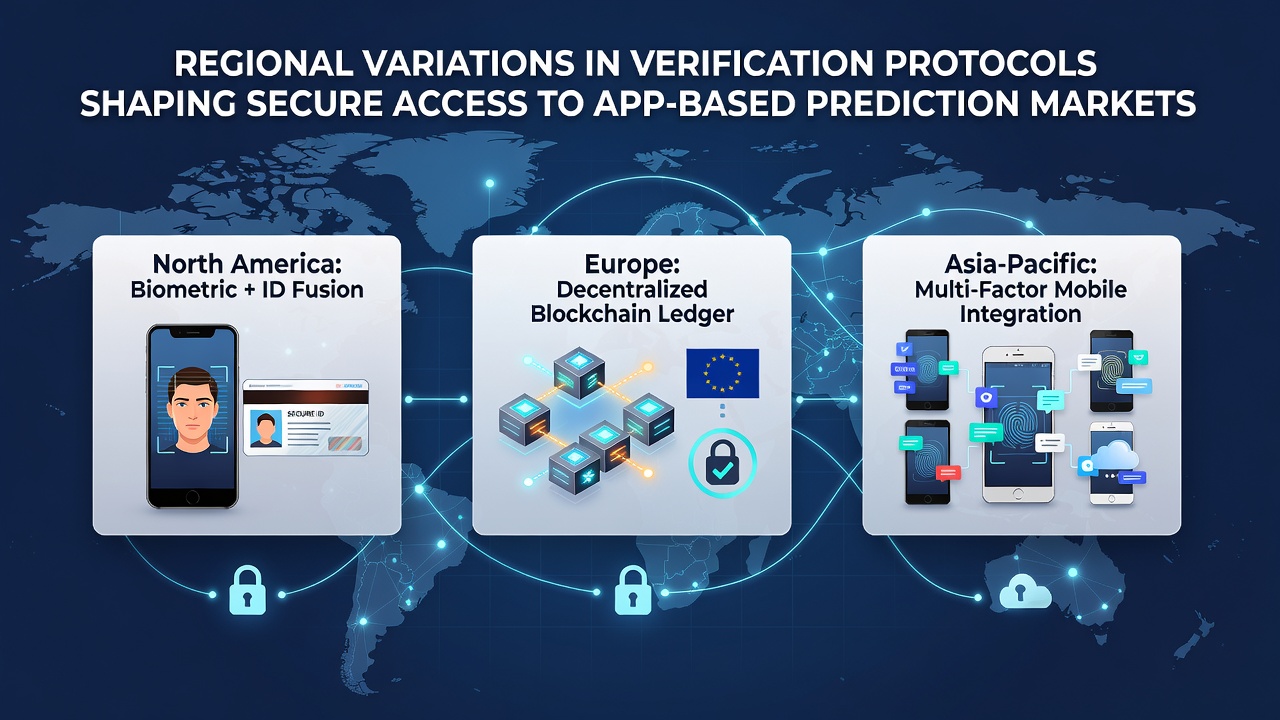
October 2026 brought incremental updates in two key jurisdictions. Singapore introduced a digital-token verification pilot that links prediction-market accounts to the national digital identity system, while several Australian states began testing voluntary biometric opt-ins for high-volume users. These changes illustrate how regulators continue to refine protocols in response to both technological capability and observed risk patterns.
Security Outcomes and User Impact
Evidence from academic papers suggests that regions with stricter upfront verification experience fewer account-takeover events, yet they also report higher abandonment rates during the initial registration phase. In contrast, markets that permit progressive verification—allowing limited activity before full checks—see increased engagement but must maintain robust transaction-monitoring systems to compensate. Industry organizations such as the International Association of Gaming Regulators have documented that hybrid models combining device fingerprinting with periodic re-verification strike the most consistent balance across jurisdictions.
Users traveling between regions encounter inconsistent experiences. Someone verified under Canadian rules may still trigger additional prompts when accessing the same app from an EU IP address, because data-sharing agreements between regulatory bodies remain limited. This friction has prompted several platforms to develop region-aware onboarding flows that automatically adjust the required document set based on detected location.
Conclusion
Regional variations in verification protocols continue to define the boundaries of secure access for app-based prediction markets. As platforms expand, the interplay between local regulations, technological tools, and user expectations will determine which verification models prevail. Data collected through 2026 indicate that adaptive, location-sensitive systems currently deliver the strongest combination of security and accessibility, while ongoing regulatory updates will likely produce further differentiation rather than convergence.